Loading
Loading
Mitsubishi has its origins in a shipping company founded by Yataro Iwasaki in 1870, which expanded into a vast conglomerate (zaibatsu) spanning shipping, mining, shipbuilding, banking, and manufacturing. The Mitsubishi automobile division began in 1917 with the Model A, Japan's first series-production passenger car, built by Mitsubishi Shipbuilding Company.
The automotive division went through several reorganizations, eventually becoming Mitsubishi Motors Corporation in 1970. Mitsubishi built a reputation for engineering innovation, particularly in four-wheel-drive technology and performance cars, while also producing commercial vehicles, SUVs, and kei cars through its 51 percent-owned subsidiary Mitsubishi Motors.
Mitsubishi had a commercial alliance with Chrysler from 1970 through the 1990s, with Chrysler selling Mitsubishi-designed cars as Dodges, Plymouths, and Eagles in the US market. Mitsubishi also established a US manufacturing joint venture with Chrysler called Diamond-Star Motors (DSM) in 1985, which produced performance coupes like the Mitsubishi Eclipse, Eagle Talon, and Plymouth Laser.
The company has been part of the Renault-Nissan-Mitsubishi Alliance since 2016, when Nissan acquired a controlling stake. The brand has since narrowed its focus to SUVs, crossovers, and plug-in hybrid vehicles, withdrawing from performance car segments.
[Note: Mitsubishi Motors has faced several significant corporate scandals, including a systematic defect cover-up revealed in 2000 and fuel economy testing irregularities in 2016. The 2016 scandal led to Nissan acquiring a controlling stake as part of a rescue package.]
The Mitsubishi Lancer Evolution (1992-2015) was a turbocharged, all-wheel-drive performance sedan developed primarily for World Rally Championship homologation. Through ten generations, it competed directly with the Subaru Impreza WRX STI and developed a dedicated enthusiast following. The Evolution nameplate has not been revived since 2015, and its future remains uncertain.
Mitsubishi introduced the first production car with a heads-up display in 1989 on the Mitsubishi Galant VR-4, though the technology was rudimentary compared to later systems and was not continued in subsequent models.
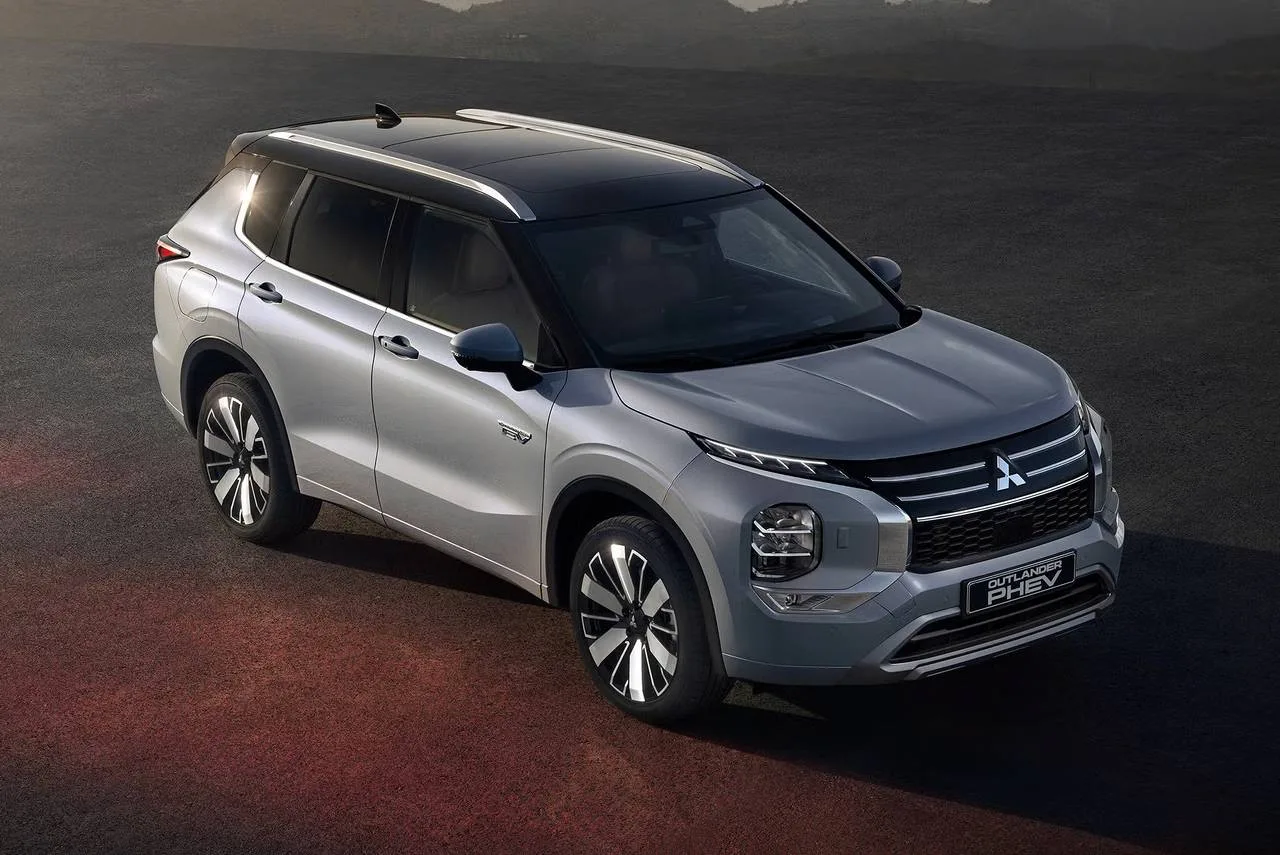
The Mitsubishi Outlander PHEV (2013) was the world's first plug-in hybrid SUV and became the best-selling plug-in hybrid vehicle in Europe for multiple years. Its combination of SUV practicality with plug-in hybrid technology created a segment that every major manufacturer has since entered.
Mitsubishi developed the first production application of a variable-valve timing system in a Japanese car with the Mitsubishi 4G63 engine in the 1980s, and later introduced MIVEC (Mitsubishi Innovative Valve-timing and lift Electronic Control) in 1992, which combined variable valve timing with variable valve lift.
Mitsubishi was an early pioneer in automotive laser welding technology, using it in body construction for improved rigidity and reduced weight. [Note: the specific models and timelines for this technology introduction are not well documented in publicly available sources.]
Yataro Iwasaki founded a shipping company that would grow into the Mitsubishi zaibatsu, one of Japan largest industrial conglomerates.
Mitsubishi built the Model A, Japan first series-production passenger car, at its Kobe shipyard.
Mitsubishi Motors Corporation was established as a separate entity from the Mitsubishi Heavy Industries automotive division.
The first Lancer Evolution was launched as a turbocharged, all-wheel-drive rally homologation special.
The Mitsubishi Outlander PHEV was launched as the world first plug-in hybrid SUV, later becoming Europe best-selling PHEV.
How the platform works for buyers and dealers