Loading
Loading

Lancia was founded in Turin in 1906 by Vincenzo Lancia and Claudio Fogolin. From its earliest days, the company distinguished itself through engineering innovation. The 1913 Lancia Theta was the first European production car with a complete electrical system, while the 1922 Lambda introduced a monocoque body structure that set a new benchmark for chassis rigidity. These early achievements established Lancia as a marque that refused to follow convention.
After World War II, Lancia entered its golden era with models like the Aurelia, which featured the first production V6 engine, and the Flaminia, a grand tourer that embodied Italian style. By the 1970s, Lancia had turned decisively toward motorsport. The Stratos HF, purpose-built for rallying, won the World Rally Championship in 1974, 1975, and 1976. The legendary Delta Integrale followed in the 1980s and 1990s, dominating the WRC with six consecutive constructor titles.
Financial difficulties mounted through the late 20th century despite continued engineering excellence. The Thema, Dedra, and Lybra models sold respectably but could not restore the brand to its former independence. Fiat acquired full ownership in 1969, and Lancia gradually shifted from an innovative independent manufacturer to a single-market brand serving primarily Italian customers.
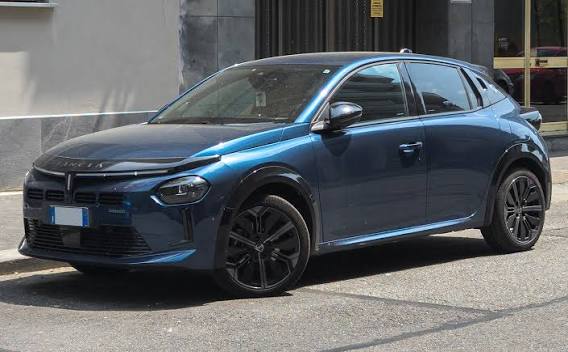
Today, Lancia produces only the Ypsilon city car for the Italian market. A planned revival under Stellantis ownership promises to return the brand to a wider European audience with electric models, though it remains to be seen whether the reimagined lineup will recapture the spirit of the Stratos and Delta era. The marque's rally legacy and engineering heritage remain deeply respected among enthusiasts worldwide.
Lancia pioneered the monocoque body structure with the 1922 Lambda, eliminating the traditional separate chassis and setting a standard that the entire automotive industry would eventually adopt. This innovation improved rigidity, reduced weight, and enhanced safety in ways that were decades ahead of most competitors.
The 1950 Aurelia introduced the first production V6 engine, designed by Francesco de Virgilio. This compact, smooth engine configuration became a staple of the automotive industry and influenced engine design across multiple manufacturers for generations.
Lancia was an early adopter of independent front suspension, four-wheel disc brakes, and supercharging technology. The Stratos HF became the first car designed from the ground up specifically for rallying, with a mid-engine layout and a lightweight body that set the template for future competition cars.
The Delta Integrale featured permanent four-wheel drive, turbocharging, and advanced aerodynamics that made it nearly unbeatable in Group A rallying. Its electronic engine management and active suspension concepts were state of the art for the late 1980s.
How the platform works for buyers and dealers