Loading
Loading

Christian von Koenigsegg founded his eponymous company in 1994 at the age of 22, driven by a childhood dream of building his own supercar. The early years were a struggle of limited resources and immense ambition. The first prototype, the CC, was completed in 1996, and its positive reception at the Cannes Film Festival convinced Koenigsegg to pursue production. The CC8S debuted in 2002 and immediately established the brand as a serious engineering force.
The CCR arrived in 2004 and briefly held the world speed record for a production car at 388 km/h, putting Koenigsegg on the global map. The company's approach was distinctive from the start: in-house engine development, bespoke chassis engineering, and a willingness to reject conventional solutions in favor of novel approaches. Every component was designed and built with a specific performance goal in mind.
The CCX, introduced in 2006, was the first Koenigsegg designed for the American market, with a new 4.7-liter V8 engine that could run on E85 biofuel. The Agera followed in 2010 and became Koenigsegg's most successful model line. Its 5.0-liter twin-turbo V8 produced over 1,000 horsepower, and variants such as the Agera RS, One:1, and Regera pushed performance to levels that redefined what was possible.
The Jesko, named after Christian's father, introduced in 2019, features a 5.0-liter twin-turbo V8 producing 1,600 horsepower on E85 fuel. The Gemera, a four-seat hybrid grand tourer, was launched as the company's first family-oriented model. Koenigsegg has consistently operated at the technological frontier of the hypercar industry, developing proprietary systems that no other manufacturer has replicated.
Koenigsegg's Freevalve technology eliminates the traditional camshaft in favor of individual pneumatic-hydraulic actuators for each valve. This system allows infinitely variable valve timing, lift, and duration on each cylinder, enabling multiple combustion cycles within a single engine design. No other production car manufacturer has achieved this level of valvetrain control.
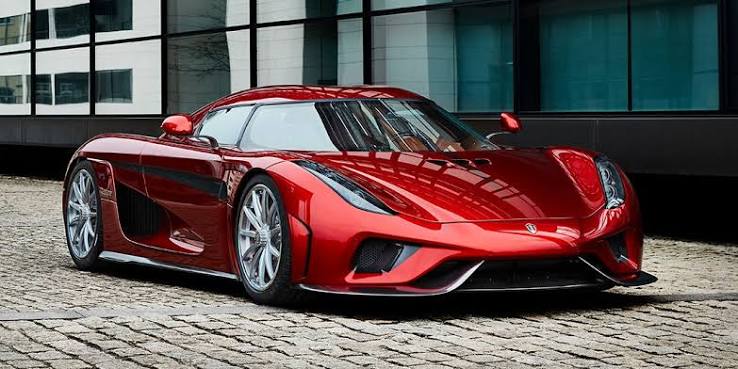
The Koenigsegg Direct Drive transmission, used in the Regera, eliminates the conventional gearbox. A single-speed fixed gear ratio connects the engine to the wheels, with torque multiplication handled entirely by three electric motors. This system removes the weight, complexity, and power losses of a multi-speed transmission while enabling seamless acceleration.
The One:1 achieved a power-to-weight ratio of one metric horsepower per kilogram, a milestone that had been considered impossible for a road-legal production car. The carbon fiber monocoque, developed in-house, set new standards for rigidity and crash protection while maintaining extreme lightness.
How the platform works for buyers and dealers