Loading
Loading

W.O. Bentley founded Bentley Motors in 1919 with a clear ambition: to build a fast lorry, a statement that referred to building robust, high-performance cars. The first Bentley engine, a 3.0-liter four-cylinder, appeared in the 1921 Bentley 3 Litre and won at Le Mans in 1924.
Bentley dominated Le Mans in the 1920s with five overall victories, driven by the so-called Bentley Boys, a group of wealthy British amateur racers. The company struggled financially during the Great Depression and was acquired by Rolls-Royce in 1931, a partnership that lasted until 1998.
Volkswagen Group purchased Bentley in 1998 and invested heavily in new models. The Continental GT, introduced in 2003, revived the brand with a W12 engine and became its best-selling model. The Bentayga SUV, launched in 2015, opened a new segment for ultra-luxury SUVs.
The Bentley 4.5 Litre "Blower" (1929) was one of the first road cars designed with a supercharger, though its racing record was mixed.
The Continental GT (2003) was the first production car to use a W12 engine configuration, combining the power of two narrow-angle VR6 engines.
Bentley introduced mass-production techniques for luxury automobiles while maintaining hand-crafted interior appointments, bridging craftsmanship with scale.
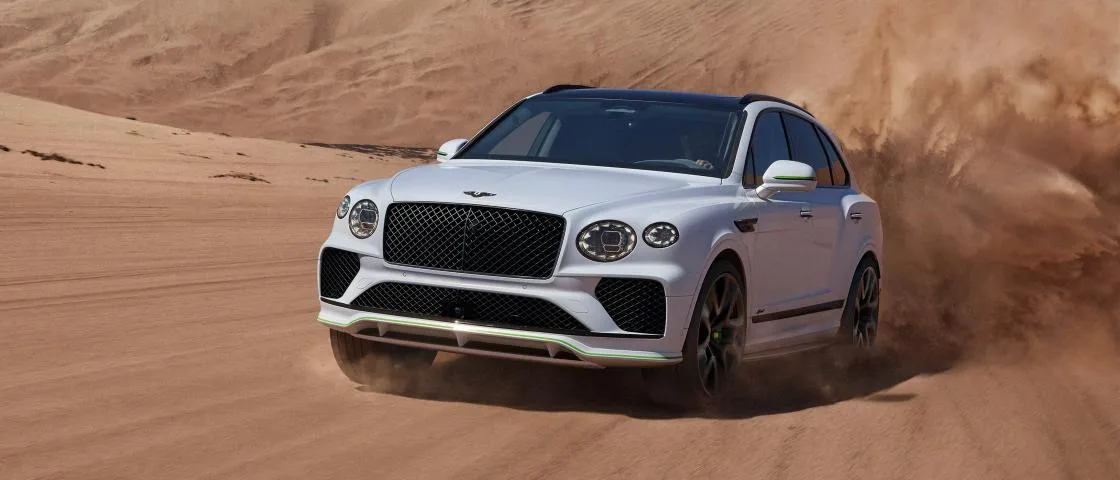
The Bentayga (2015) created the ultra-luxury SUV segment, combining off-road capability with Bentley levels of refinement.
W.O. Bentley founded Bentley Motors in Cricklewood, London, with a focus on building high-performance automobiles.
A Bentley 3 Litre won the 24 Hours of Le Mans, the first of five overall victories for the brand in the 1920s.
Rolls-Royce acquired Bentley after the company entered receivership during the Great Depression.
The W12-powered Continental GT revived the Bentley brand and became its best-selling model after Volkswagen Group ownership.
The Bentayga ultra-luxury SUV generated significant new demand for the brand and opened a new vehicle segment.
How the platform works for buyers and dealers